


GP with Special Interest program: Strengthening ties, upskilling general practitioners and reducing waitlists
Dr Michelle Johnston, GPLO, Sunshine Coast Hospital and Health Service
Over the past decade new models of care to address long wait lists and improve timely access have been developed. The GP with Special Interest (GPSI) model of care addresses these challenges and has proven to be efficient and successful.
The Challenge
Hospitals are facing pressure due to escalating demand, leading to longer waitlists in outpatient clinics and delaying access to care for consumers. This strain risks both hospital efficiency and patient safety.
Opportunities
Primarily an integrated care initiative, the program provides extra doctors to help take the pressure off specialty teams, reduce waitlists and close the gaps between hospital and general practice care. The GPSI program offers 2-way benefits including:
- improved access and reduced waitlists
- strengthened clinical skills within primary care
- building of hospital specialists’ confidence to transfer care of patients back to their community doctors.
GPSIs integrated within hospital outpatient teams are a win for collaborative care.
The approach
The Sunshine Coast Hospital and Health Service (SCHHS) GPSI program was established after an 18-month pilot project funded by the Healthcare Improvement Unit, running between January 2018 and June 2019. It proved to be a successful model of care and became business as usual.
Local GPs are recruited to work within specialty outpatient teams, whilst continuing their role in the community.
They must have a GP specialty fellowship and preferably at least 5 years’ experience in general practice. Other requirements (if any) are determined by each individual specialty and may include extra qualifications or experience in the relevant field. Specific procedural skills can be acquired through structured, on-site training and credentialing.
Management of the GPSI program is centralised, with a dual line of reporting. We believe this structure is an important factor for success1. The specialty director is the professional lead and the GP Liaison Officer (GPLO) is the line manager of all general practitioners with special interests (GPSIs) to ensure strategic oversight of the program. Joint recruitment ensures the GPSI is a good fit for both the specific team and the broader program.
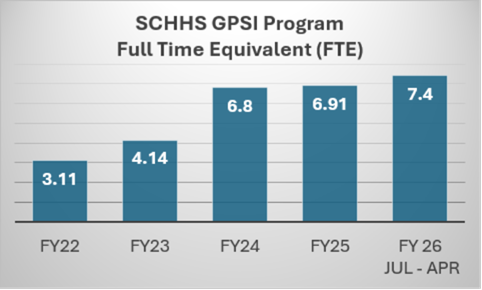
The GPSI program has proven efficiency and has continued to expand2. The workforce has almost doubled in the last 3 years and now consists of 44 GPSIs in 22 clinical specialties. Several specialty departments have requested additional GPSIs and these are currently being considered to determine clinical and operational benefits.
The specific case-mix for GPSIs is established by each specialty department to align with service demands and ensure that clinical activity is directed toward appropriate patient cohorts. Some focus exclusively on new patients while others manage follow-up reviews, enabling consultants to prioritise high-acuity cases.
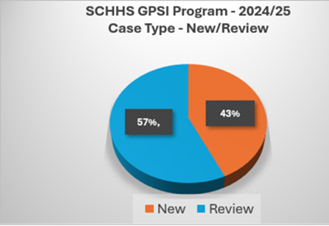
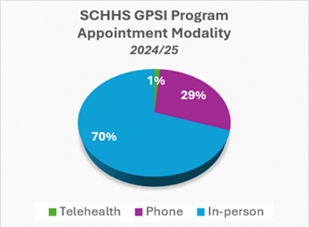
Occasions of service can be face to face or via telehealth/phone consultations.
The impact
Key Impacts
- Clinical knowledge and referral quality: GPSIs gain specialised knowledge they can take back to their practices and peers, supporting care in the community and leading to higher-quality referrals.
- Enhanced discharge and patient flow: GPSIs achieve a high rate of discharge from outpatients back to the regular GP. They have a good understanding of what their GP colleagues need to provide ongoing care in the community and support this through timely discharge letters and management plans.
- System integration: GPSIs work within outpatient teams, bridging traditional silos to build understanding and collaboration between the health sectors.
Performance data
The program continues to show strong operational growth and consistent outcomes. More patients are seen within clinically recommended timeframes:
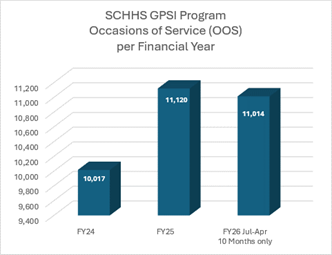
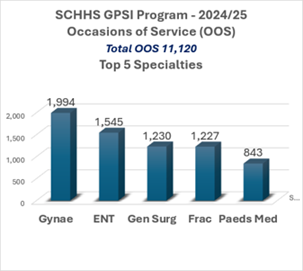
- 6.91 full-time equivalent (FTE) GPSIs saw an extra 11,120 patients in FY25.
- 7.4 FTE GPSIs provided 18,045 occasions of service between July 2025 and March 2026.
Additional success indicators
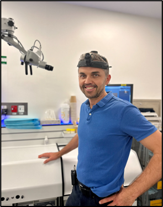
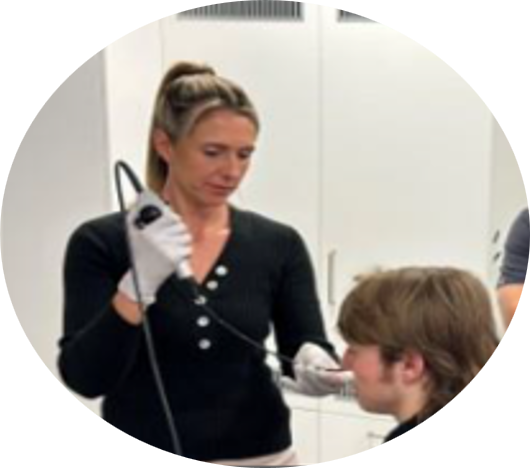
Operational productivity: Increased activity in outpatient clinics and expanded capacity in specialised procedures, including colposcopy, nasal endoscopy and flexible cystoscopy.
High discharge rates: GPSIs achieve high discharge rates (average 24%) from outpatient clinics, significantly enhancing patient flow by transferring care back to the community.
Stakeholder satisfaction: Our survey results show very high satisfaction rates from GPSIs, specialty consultants and from consumers seen in GPSI outpatient clinics.
Quotes from GPSIs from satisfaction surveys
‘My clinical knowledge is growing.’
‘It makes me realise that GPs should … provide more detailed referrals to help our hospital colleagues.’
‘It makes me […] appreciate how the public system works.’
‘This process needs to be made into an essential rite of progress for GPs. The benefits, both individual and collective, are enormous.’
Quotes from consumers from satisfaction surveys
‘[…] extremely good service.’
‘The doctor was very clear, helpful, understanding, kind.’
‘Professional, polite. Great bedside manner […] Person centred approach.’
Quotes from consultants from satisfaction surveys
‘Very appreciative of the GPSI; it has improved the quality of patient care and allowed us to meet the needs of managing physical healthcare comorbidity.’
‘[…] ensure this valuable service continues.’
Next steps
Building on its proven success, the GPSI program continues to expand. This expansion is not just about numbers; it is about a growing alliance between hospital and primary care sectors.
By building this bridge, we are moving away from disconnected silos and toward a more collaborative healthcare system where specialist and primary care work together to provide efficient, connected care and safe clinical handover.
References
- Purtell, L., Whiting, E., Muller, K., McSherry, C., Gillespie, K., Havas, K., & Bonner, A. (n.d.). Evaluation of a general practitioner with special interest model: Lessons learned from staff experiences. Australian Journal of Primary Health, 28(4), 330–337. https://doi.org/10.1071/py21065
- Australasian Medical Publishing Company (AMPCo). (2026, April 26). GPs with a special interest improve connection between hospitals and. . .. InSight+. https://insightplus.mja.com.au/2023/35/gps-with-a-special-interest-improve-connection-between-hospitals-and-primary-care.